
Pilgrims Progress
The Pilgrim’s Progress is an allegory written by John Bunyan in 1678 with a Christian form, however the allegory goes beyond at simmer. It is widely regarded as one of the most significant works of religious literature in the English language. The book is divided into two parts and tells the story of a Christian pilgrim named Christian who travels from the City of Destruction to the Celestial City, encountering various obstacles, temptations, and challenges along the way.
Bunyan’s allegory draws upon many elements of Christian theology, including salvation, faith, sin, grace, and the nature of spiritual growth. The Pilgrim’s Progress is also notable for its use of vivid, imaginative imagery, and its memorable characters, including Evangelist, Faithful, and the villainous Giant Despair.
The book’s popularity was immediate, and it has since been translated into over 200 languages. It has been widely adapted and referenced throughout popular culture, and its influence can be seen in works ranging from C.S. Lewis’s Chronicles of Narnia to contemporary Christian music.
Walk into the deep



John Bunyan’s life and experiences as a Puritan preacher and prisoner undoubtedly informed his writing of The Pilgrim’s Progress. He spent twelve years in prison , during which time he wrote the book and other works, as well as refining his own spiritual beliefs and experiences. His legacy remains an important part of English literature and religious history, and his impact on subsequent generations of writers and readers is immeasurable.
You would surely make a path to the destination. Be sure to simmer. A lot of thanks to the creators of Pilgrim’s Progress. The creator after some time has decided to set the english version private so you may have to know another language to watch. The french is available so would share when found. A summary would be provided to make up.

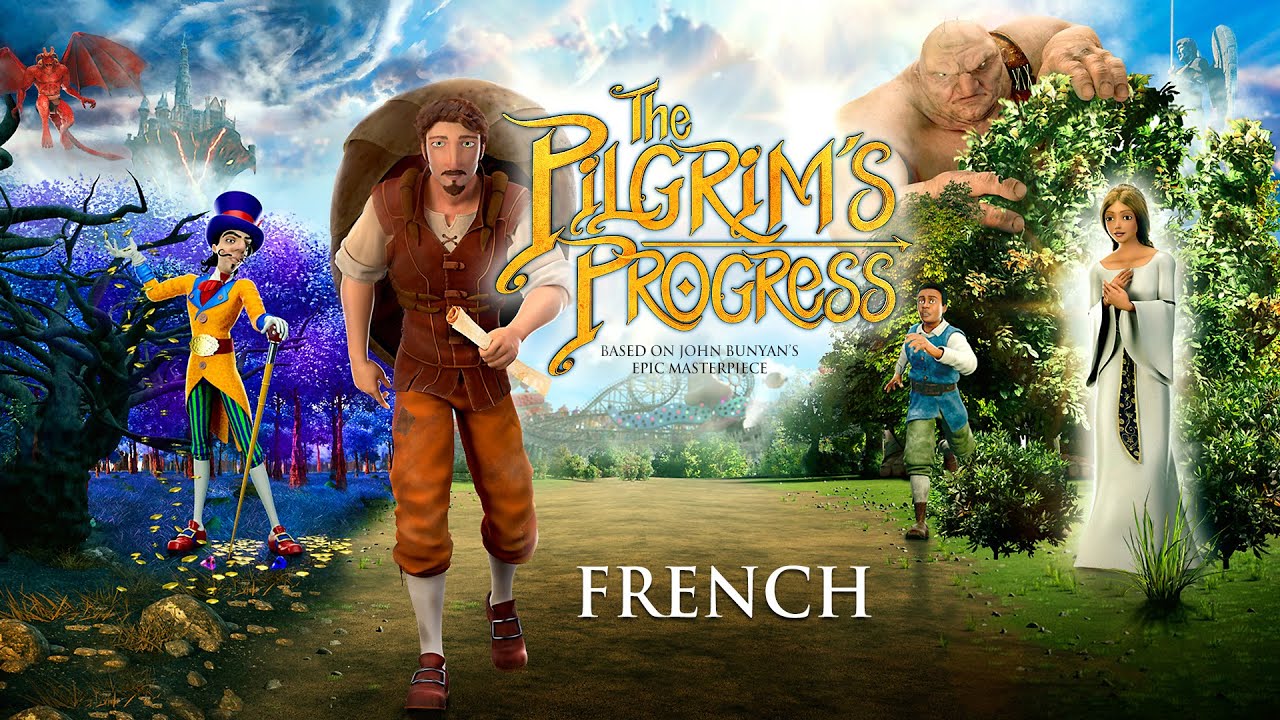
A lot of thanks to the creators of Pilgrim’s Progress. Be sure to simmer.
The Summary if you have not read or unable to watch
- The Starting Point
City of Destruction Christian lives in the City of Destruction (the world of sin). He is weighed by a heavy Burden on his back (his sin and guilt). An earthquake threatens the city; he hears he must flee to avoid destruction. - The Call and the Path Evangelist appears and tells him
He must go to the Celestial City (Heaven). He must follow the straight path to the Wicket-gate (Christ/salvation).
Christian begins his journey, leaving family and home behind.
- First Obstacle
Slough of Despond Christian and a companion, Pliable, fall into the Slough of Despond (a miry bog = despair over sin). Pliable escapes; Christian is nearly trapped. His burden is heavy; he sinks deeper. A man named Help pulls him out. - Wrong Advice
Mr. Worldly Wiseman Mr. Worldly Wiseman tells Christian: The path is dangerous. He should go to the village of Morality and the house of Legality ( salvation by law/works). This is a false path: trying to be saved by human effort rather than grace.
Evangelist later rebukes Christian for listening to Worldly Wiseman and reaffirms the true path.
Walk into the deep



- The Wicket-Gate
Christian reaches the Wicket-gate. He is told the gate is Christ and that he must enter to be saved. He passes through and enters the proper path. - The House of the Interpreter
Christian is taken to the House of the Interpreter. He sees symbolic scenes (e.g., a dusty room swept by a man, a man tied in a cage, etc.) that teach spiritual truths about sin, grace, and the heart. - The Journey
Key Places and Trials
Along the way, Christian encounters:
Mount Sinai: A mountain that seems to threaten to fall; represents the terror of the law. The Valley of Humiliation: Where Christian learns humility. The Valley of the Shadow of Death: A dark, dangerous valley full of screams, flames, and pits; represents spiritual despair and trials. Vanity Fair: A town where people are tempted by worldly goods, honors, and pleasures. The House of Careful: A place where fear and doubt try to hinder pilgrims.
- New Companions and Characters
Christian meets:
Faithful: A fellow pilgrim who tells of his own journey and encounters: Adam the First (the old sinful nature). Discussions of law vs. grace. Hopeful: A later companion who joins Christian after Faithful is gone. By-Ends: A hypocritical traveler who tries to avoid danger while gaining the same reward; represents those who want salvation without sacrifice. Shadow-of-Death, Hearse, and others: symbolic figures representing various faults.
- The Final Stages
Near the end of the journey:
Walk into the deep


They pass through Beulah, a place of rest and joy near the Celestial City. They face the River of Death, which must be crossed to reach the Celestial City.
- Crossing the River of Death
As they enter the river:
Christian begins to sink, crying out: “I sink in deep Waters; the Billows go over my head; all his Waves go over me.” Hopeful encourages him. Both cross the river and reach the shore.
- The Celestial City They arrive at the Celestial City atop Mount Zion. They are welcomed in, their burdens removed, and they enter eternal life.
Key Allegorical Symbols (as Bunyan uses them)
| Symbol | Meaning |
|---|
| Symbol | Meaning |
|---|---|
| Christian | Every Christian (everyman) |
| Burden | Sin and guilt |
| City of Destruction | The sinful world |
| Evangelist | The gospel / preacher of the gospel |
| Wicket-gate | Christ / salvation |
| Slough of Despond | Despair over sin |
| Mr. Worldly Wiseman | Worldly advice; salvation by works |
| Legality / Morality | Law-based righteousness |
| House of the Interpreter | Instruction in spiritual truth |
| Apollyon | The Devil |
| Valley of Humiliation | Spiritual humility |
| Valley of the Shadow of Death | Despair, trials, terror |
| Vanity Fair | Worldly temptations |
| Faithful | Faith |
| Hopeful | Hope |
| By-Ends | Hypocrisy |
| House Beautiful | The church / safe resting place |
| Lions | Apparent dangers under God’s control |
| Beulah | Rest and nearness to Heaven |
| River of Death | Death and final trial |
| Celestial City | Heaven |
This is a resource expressions around a 1678 work The Pilgrim’s Progress by John Bunyan

G



Conversations
You must be logged in to comment on this article.
Log In / Register