
Decern the Music and Dance
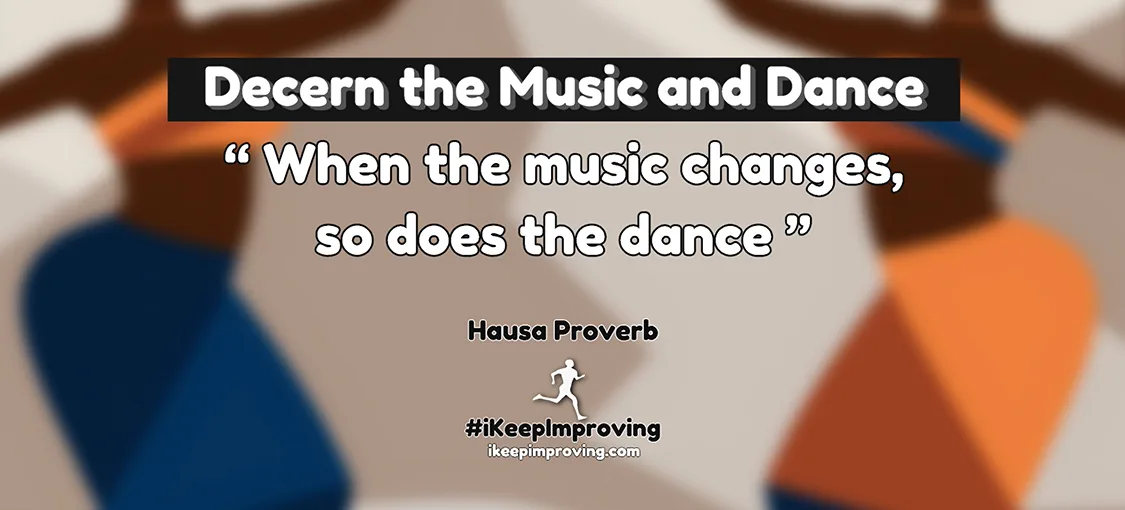
Hausa Proverb
This proverb uses dance as a stand in for behavior and music as a stand in for circumstance. A skilled dancer does not perform the same fixed routine no matter what is playing, they listen first, then move in a way that fits what they are hearing. The moment the rhythm shifts, the dance shifts with it, not because the dancer has abandoned their skill, but because skill itself includes the ability to read what is actually happening and respond accordingly. The phrase “discern the music” puts the emphasis on perception before action. Many people fail not because they cannot adapt, but because they never actually notice that the music has changed at all, and keep performing a routine that fit an earlier moment that no longer exists.
This is a direct challenge to rigid thinking, the tendency to keep using the same strategy, the same tone, the same approach to a relationship or a market or a stage of life, simply because it worked before. Circumstances change constantly, a job that once rewarded hard work might now reward visibility, a relationship that once needed space might now need presence, an industry that once rewarded caution might now punish it. The dancer who keeps performing yesterday’s steps to today’s music is not being loyal or consistent, they are simply out of step, and everyone watching can tell. The proverb suggests that real consistency is found in the underlying skill of paying attention and adjusting, not in repeating the same fixed movements regardless of context.
As motivation, this idea asks for two things in sequence rather than one. First, genuine discernment, actually listening for what has shifted around you rather than assuming the conditions of the past still apply. Second, the willingness to change your approach once you notice that shift, even if the old approach once worked well and feels comfortable to repeat. Stagnation usually does not come from lack of effort, it comes from continuing to dance to music that has already stopped playing. The proverb’s underlying claim is that flexibility is not the opposite of mastery, it is what mastery actually looks like once you are paying close enough attention to notice the music has moved on.
Walk into the deep


G



Conversations
You must be logged in to comment on this article.
Log In / Register