
The Owned
There was once a man who owned nothing, and walked light. He slept where the night found him, ate what the day gave him, and when he moved, all he carried moved with him in a single sack.
One year he bought a field, for he had grown tired of walking and wanted a place to call his own. The field was good land, and he was proud of it, and for a season he tended it with joy, for it was his.
But a field cannot be left alone. It must be watched against thieves, so he built a wall. A wall must be maintained, so he took a second field to pay for its upkeep. Two fields needed two men to work them, so he purchased their labor, and now he owned not only land but the hours of other lives, and felt the weight of that ownership settle onto his shoulders like a yoke he had built for himself with his own hands.
Walk into the deep
He noticed, some years later, that he no longer walked light. He rose before the sun not because the sun called him but because his fields called him, fearful and demanding, needing him the way a hungry child needs a mother. He could not travel far, for the fields could not travel with him and would not survive him. He could not sleep easily, for he dreamed of drought and thieves and debts. He had set out to own land, and discovered that in the owning, he himself had become owned.
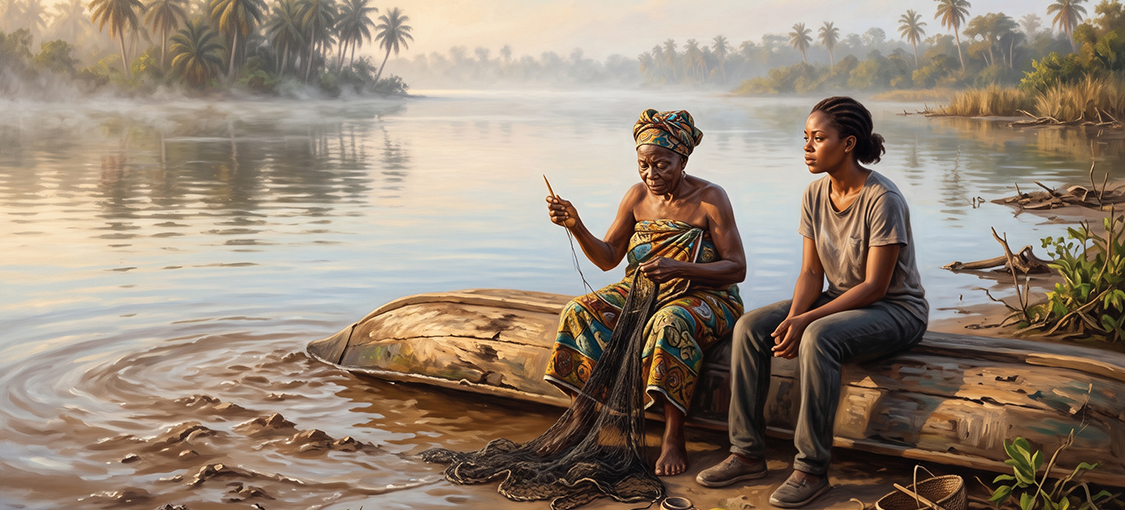
He went to an old woman who lived at the edge of the village with nothing but a walking stick and a bowl, and he asked her, “How is it that you seem freer than I am, when I have fields and you have nothing?”
She said, “You mistake what you saw. I have exactly as much as I can carry, and so nothing I have can carry me away from myself. You have things that cannot fit in your arms, and so you have had to grow arms large enough to hold them, and those arms are heavier than they look.”
“Then should no one ever own anything?”
“That is not what I said,” the old woman answered. “A field is not evil, and a wall is not evil, and there is no virtue in an empty bowl for its own sake. What matters is which one of you is master. Ask yourself honestly: when you lie awake at night, is it your fields troubling your sleep, or is it you troubling theirs? Whichever one loses sleep over the other is the one being owned.”
Walk into the deep
The man sat with this a long while, and finally asked, “How do I know when I have crossed from having a field to being had by it?”
“You will know,” she said, “on the day you imagine losing it, and feel not sorrow but terror. Sorrow means you loved something and let it go. Terror means the thing had grown roots into you deeper than your roots had grown into it. A man may hold many things gently, and lose none of himself. But a man who cannot imagine his own hands opening has already handed his hands away.”
The man returned to his fields, and did not sell them, for the old woman had not told him to. But he began each morning by asking which one of them, that day, was master. And in the years that followed, when drought came and took one field entirely, he found to his own surprise that he grieved, and slept, and woke the next morning still whole, still walking, still his own.

G


Conversations
You must be logged in to comment on this article.
Log In / Register