
The Quiet Blade – What The Art of War Still Teaches Us
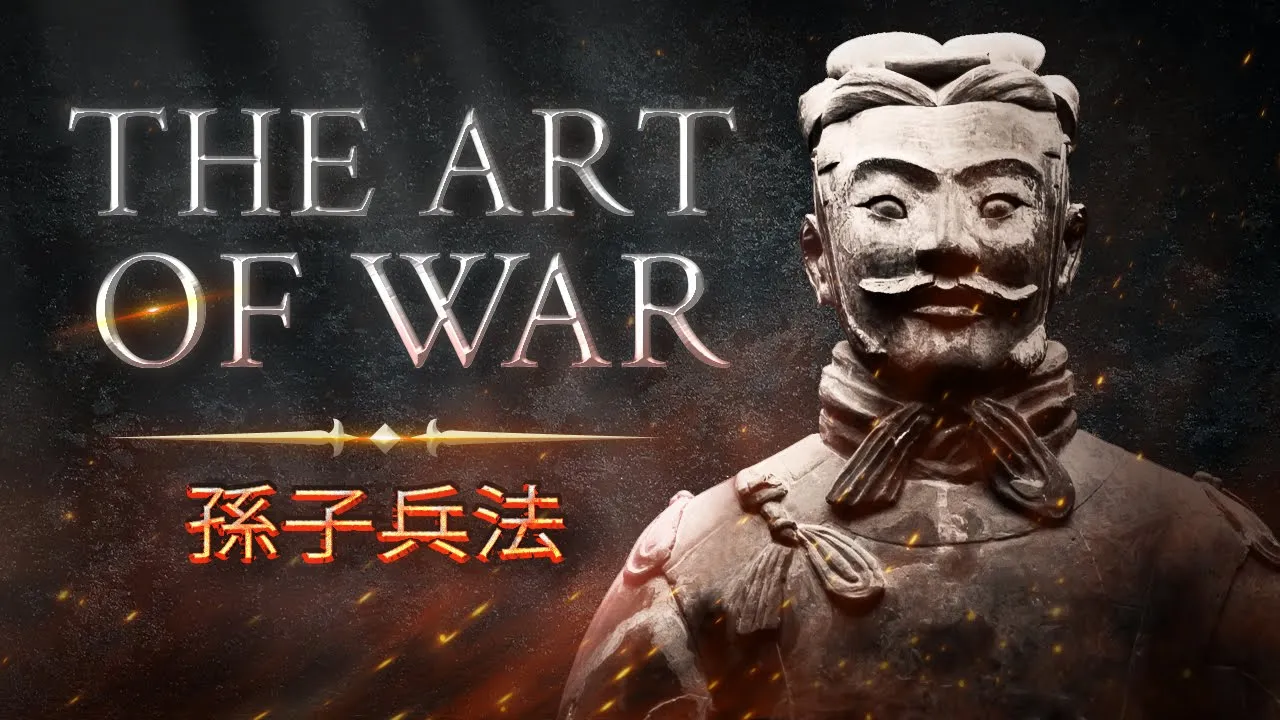
Some twenty-five centuries ago, during the restless years of China’s Spring and Autumn period, a general named Sun Tzu (Master Sun) set down his thoughts on war. The result was a slim text of thirteen short chapters. It contains no battle maps, no heroic legends, and almost no stories. What it offers instead is something far more durable: a way of thinking.
The Art of War has travelled a remarkable road. It shaped the campaigns of Chinese dynasties, was studied by Japanese samurai, and later found its way into Western military academies, boardrooms, sports locker rooms, and negotiation seminars. Its survival is no accident. Sun Tzu was not really writing about swords and chariots. He was writing about how to see a situation clearly, how to prepare for it wisely, and how to act at exactly the right moment.
At its heart lies a surprising idea for a book about war: the best victory is the one you never have to fight.
Walk into the deep

1. Laying Plans: Victory Begins Before the Battle
Sun Tzu opens with a warning. War is a matter of life and death for a state, a road either to safety or to ruin. It must never be entered lightly.
Before any campaign, he says, a leader must weigh five constant factors:
- The Way (Tao): the moral bond between ruler and people, so that soldiers follow their leader without fear for their lives.
- Heaven: timing, weather, seasons, and conditions beyond our control.
- Earth: terrain, distance, danger, and the ground itself.
- The Commander: wisdom, sincerity, benevolence, courage, and strictness.
- Method and Discipline: organization, logistics, chains of command, and supply.
Whoever scores better across these factors, calculated honestly in the temple before the fighting begins, is likely to win.
This chapter also contains the book’s most famous line: all warfare is based on deception. When able to attack, appear unable. When near, appear far. Offer bait to lure the enemy. Strike where they are unprepared. Strategy, in Sun Tzu’s view, is as much about managing perception as managing force.
2. Waging War: The Hidden Cost of Conflict
Here Sun Tzu becomes an economist. Armies are staggeringly expensive. Every day in the field drains treasure, exhausts soldiers, and weakens the state at home, inviting other rivals to take advantage.
Walk into the deep
His conclusion is blunt: no nation has ever benefited from prolonged warfare. Speed matters. A swift, decisive campaign, even an imperfect one, is better than a clever but drawn-out one. He also advises living off the enemy where possible, since one cart of the enemy’s grain is worth twenty of your own hauled over long distances.
The lesson reaches far beyond the battlefield: every conflict has a cost curve, and time is rarely on the side of the one who lingers.
3. Attack by Stratagem: The Art of Not Fighting
This is the philosophical core of the book. Sun Tzu ranks the ways of defeating an opponent from best to worst:
- Defeat their strategy.
- Break their alliances.
- Defeat their army in the field.
- Worst of all, besiege their walled cities, which wastes time, lives, and resources.
Supreme excellence, he argues, is not winning a hundred battles. It is breaking the enemy’s resistance without fighting at all.
He closes the chapter with advice that has echoed through history. Know the enemy and know yourself, and you need not fear the outcome of a hundred battles. Know yourself but not the enemy, and for every victory you will suffer a defeat. Know neither, and you will lose every time.
Walk into the deep

4. Tactical Dispositions: First Become Unbeatable
Sun Tzu observes that skilled warriors of old first put themselves beyond the possibility of defeat, then waited patiently for the enemy to become vulnerable.
The distinction is subtle and powerful. Your own security lies in your own hands. The enemy’s weakness is something only they can provide. So the wise commander secures the foundation first and does not force a victory that is not yet available.
Hence the principle: the victorious army wins first and then seeks battle, while the defeated army fights first and then hopes to win.
5. Energy: Momentum and Surprise
Sun Tzu introduces a pairing that runs through Chinese strategic thought: the direct (cheng) and the indirect (ch’i). The direct force engages the enemy openly; the indirect force delivers the unexpected blow. Like the five musical notes or the five primary colors, these two elements can be combined into endless variations.
He speaks of energy through vivid images: a torrent of water tumbling boulders along its course, a crossbow drawn to full tension, round stones rolling down a mountainside. The skilled leader does not demand too much of individuals. Instead, he creates circumstances, a slope, a momentum, that carry his people forward.
6. Weak Points and Strong: Be Like Water
Whoever arrives first on the field and waits for the enemy is fresh. Whoever arrives late and must rush into battle is exhausted. The skilled commander imposes his will on the enemy rather than having the enemy’s will imposed on him.
This chapter contains one of Sun Tzu’s most beautiful metaphors. An army should be like water. Water avoids high ground and flows toward low places. An army should avoid strength and strike at weakness. Water has no constant shape, adapting to the vessel it fills. Likewise, in war there are no fixed conditions, and the one who adapts to the opponent’s changes is called divine.
7. Maneuvering: Turning the Long Road Into the Short
Maneuvering is the hardest part of warfare, says Sun Tzu, because its challenge is to turn the devious route into the direct one, and misfortune into gain. Take a long, winding path, distract the enemy, and still arrive before them.
He offers a memorable portrait of a disciplined army: swift as the wind, compact as the forest, raiding like fire, immovable as a mountain, impenetrable as darkness, and striking like a thunderbolt.
He also stresses morale. Soldiers are keen in the morning, flagging by midday, and longing for camp by evening. A clever leader avoids the enemy when their spirit is high and attacks when it is sluggish. And he warns: do not press a desperate foe too hard, and leave a surrounded army a way out, lest cornered men fight to the death.
8. Variation in Tactics: The Wisdom of Flexibility
Rules exist to be understood, not blindly obeyed. There are roads not to follow, armies not to attack, towns not to besiege, and even commands from the sovereign that should not be carried out when the situation on the ground demands otherwise.
Sun Tzu then names the five dangerous faults of a general:
- Recklessness, which leads to destruction.
- Cowardice, which leads to capture.
- A hasty temper, which can be provoked by insults.
- An oversensitive sense of honor, which is vulnerable to shame.
- Excessive concern for his men, which exposes him to worry and trouble.
The point is striking: even virtues, taken to excess, become weaknesses an opponent can exploit.
9. The Army on the March: Reading the Signs
This is Sun Tzu the field observer. He teaches how to camp wisely (on high ground, facing the sun, near water and grass) and how to read the enemy from small clues.
Birds rising suddenly signal an ambush. Startled animals mean a surprise attack is coming. Dust rising high and narrow means chariots; low and wide means infantry. Humble words paired with stepped-up preparations suggest an advance. Soldiers leaning on their spears are faint from hunger.
The lesson: information is everywhere for those who pay attention. He adds a note on leadership, too. Soldiers must be treated with humanity but kept in line with firm discipline. Both are needed.
10. Terrain: Knowing the Ground and Your People
Sun Tzu classifies six kinds of ground, from accessible to distant, and explains how each shapes strategy. But he also identifies six calamities that are the fault of the commander, not of heaven: flight, insubordination, collapse, ruin, disorganization, and rout.
His most humane passage appears here. Regard your soldiers as your children, and they will follow you into the deepest valleys. Look on them as your beloved sons, and they will stand by you even unto death. Yet he warns that indulgence without authority produces spoiled children who are useless in a crisis.
11. The Nine Situations: Ground That Shapes the Heart
Sun Tzu describes nine types of strategic ground, from dispersive ground (fighting in your own territory, where soldiers are tempted to go home) to desperate ground, where survival is possible only by fighting with all one’s might.
He observes that troops placed in mortal danger discover strength they never knew they had. A good commander understands this psychology deeply.
He compares a well-led army to the shuai-jan, a legendary snake of Mount Ch’ang: strike its head and its tail attacks; strike its tail and its head attacks; strike its middle and both head and tail respond. The ideal force is a single, coordinated organism.
12. Attack by Fire: Restraint in the Face of Power
Sun Tzu details five methods of attacking with fire and the conditions (dry seasons, the right winds) required to use them.
But the chapter is remembered most for its sobering conclusion. A ruler should never go to war out of anger, nor a general fight out of resentment. Anger may in time change to gladness, and vexation may be followed by content. But a kingdom once destroyed can never come back into being, and the dead can never be brought back to life.
Few passages in any strategic text are so clear about the moral weight of power.
13. The Use of Spies: The Price of Foreknowledge
The book ends where it began: with knowledge. Sun Tzu argues that it is foolish to spend a fortune on war while refusing to spend a little on intelligence. Foreknowledge, he says, cannot be drawn from spirits, omens, or calculations. It must come from people who know the enemy’s situation.
He names five kinds of spies: local spies, inward spies (officials of the enemy), converted spies (the enemy’s own agents turned), doomed spies (who carry false information), and surviving spies (who return with reports). Of these, the converted spy is most precious, because through them all the others can be used.
Intelligence, in the end, is the foundation of every other principle in the book.
The Enduring Lessons
Stripped to its essence, The Art of War offers a handful of truths that reach far beyond the battlefield:
- Prepare thoroughly. Victory is decided in planning, not in the heat of the moment.
- Know yourself and your opponent. Clear sight beats raw strength.
- Win without fighting when possible. The costliest victory is still a cost.
- Adapt like water. Rigid plans break; flexible ones flow around obstacles.
- Act with speed and timing. Prolonged struggles drain everyone.
- Lead with humanity and discipline. People follow those who care for them and hold them to a standard.
- Never act from anger. Some losses can never be undone.
That is why a general’s handbook from ancient China now sits on the shelves of executives, athletes, diplomats, and ordinary people navigating their own daily contests. Its true subject is not violence. It is wisdom under pressure.
The sharpest blade, Sun Tzu reminds us, is the one that never needs to leave its sheath.


G



Conversations
You must be logged in to comment on this article.
Log In / Register