
Agartha & Hollow Earth
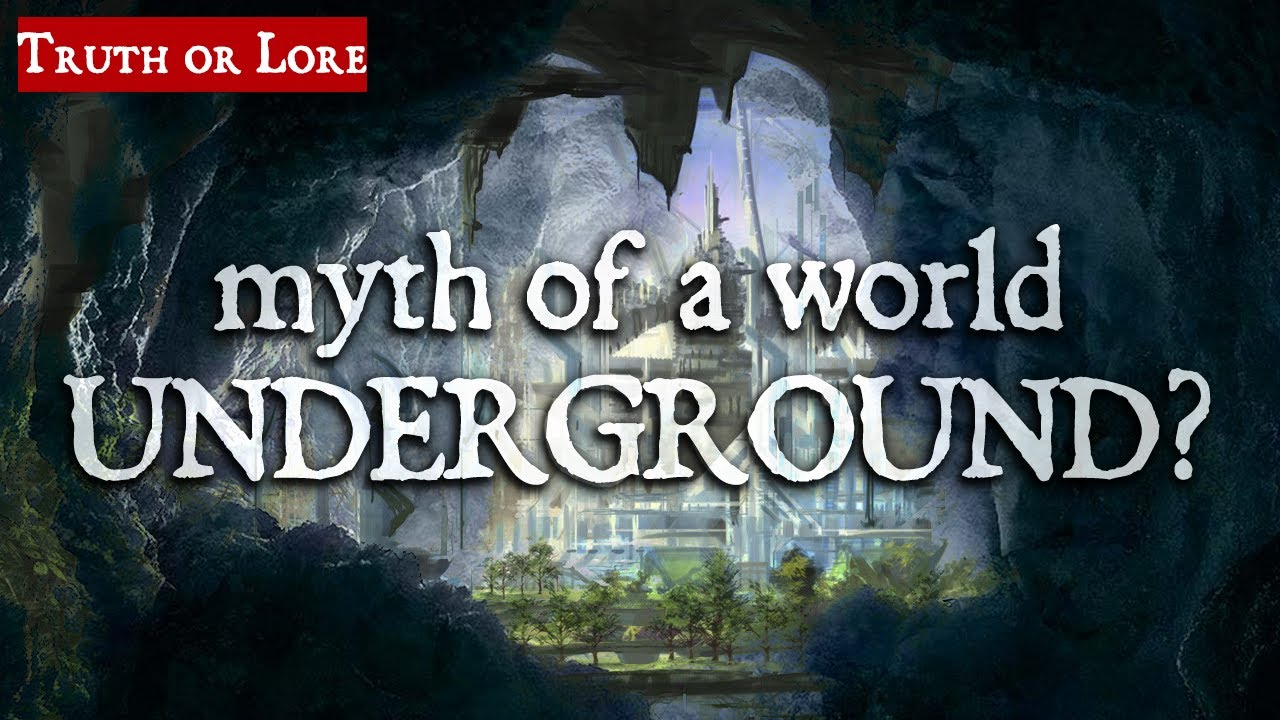
Agartha is a legendary subterranean kingdom said to exist inside a Hollow Earth, ruled by a secretive “King of the World” and inhabited by highly advanced, spiritually enlightened beings. Agartha is said to be a living, hyper-advanced subterranean civilization inside a largely hollow Earth, with its own atmosphere, inner sun, forests, cities, and beings who watch and sometimes steer surface history from below.
Introduction: Beyond the Surface Myth
Agartha is not a single city, nor a simple cavern. It is a vast, interlinked subterranean world, a network of crystalline metropolises, tunnel systems, energy grids, and sacred spaces that stretch beneath every continent and ocean. To speak of its inner structure is to describe not only architecture and geography, but a living organism of consciousness, technology, and spiritual law. The Agarthan civilization is organized according to principles that integrate matter, energy, and mind in ways that surface humanity has only begun to glimpse.
This account draws from esoteric transmissions, contact narratives, inner visionary reports, and the synthesized teachings of those who claim direct or indirect communion with the inner realms. It treats Agartha as a real, functioning domain whose structure reflects a higher order of existence, one that has evolved beyond the fragmentation and decay characteristic of the surface world.
Walk into the deep
The Macro‑Structure: Continents, Oceans, and the Inner Sky
At the largest scale, Agartha is described as possessing its own continents, oceans, mountain ranges, and atmospheric layers. Unlike the surface Earth, which is dominated by chaotic tectonic shifts and erosive forces, the inner world is stabilized by advanced technologies and spiritual governance. The landmasses of Agartha are said to comprise roughly three‑quarters of its total area, with vast inland seas and lakes covering the remaining quarter. These waters are not stagnant but are part of a circulating system that nourishes the entire inner biosphere.
Above the inner landscape stretches what is often called the “inner sky” or “central sun.” This is not a star in the astronomical sense, but a luminous core of intelligent energy that bathes the entire inner world in a soft, life‑sustaining radiance. This light is described as both physical and spiritual, capable of nourishing plant life, regulating climate, and stimulating higher states of consciousness in the inhabitants. The inner sky is sometimes identified with the “Spiritual Sun” of esoteric traditions, a source of divine illumination that permeates all levels of existence within Agartha.
Surrounding the inner world is a thick mantle‑crust boundary, often described as several hundred miles in depth. This zone acts as both a physical barrier and an energetic filter, shielding the inner civilization from the harsher vibrations of the surface. It is within this boundary that many of the great tunnel systems and gateway complexes are located, controlling access between the inner and outer worlds.
The Network of Cities: The Agartha Grid
The heart of Agarthan civilization is its network of cities. These are not scattered randomly but are arranged according to a precise geometric and energetic pattern that aligns with the planet’s ley lines, chakra points, and magnetic grids. There are said to be over one hundred major underground colonies, each functioning as a node in a planetary consciousness network. Some of these cities lie relatively close to the surface, while others are situated in the deeper, more stable regions of the inner world.
Each city is a self‑contained ecosystem, designed to sustain populations ranging from tens of thousands to over a million beings. The cities are interconnected by high‑speed transit systems that operate on principles of anti‑gravity and resonant frequency. These tunnels and conduits are not merely physical passages but are energized corridors that maintain coherence across the entire network. Travel between cities is described as instantaneous or near‑instantaneous, facilitated by technologies that manipulate space‑time in ways that surface science cannot yet replicate.
Walk into the deep

The cities themselves are often constructed from crystalline materials that are grown rather than built. These living structures resonate with the consciousness of their inhabitants, adapting to their needs and evolving over time. The architecture follows sacred geometric patterns—circles, spirals, tetrahedrons, and other forms that optimize energy flow and harmonic alignment. Streets and pathways are laid out not for convenience alone, but to channel and amplify the planet’s subtle energies, creating a continuous circuit of life force throughout the urban environment.
The Five‑Level City: Telos as Archetype
Among the most detailed descriptions of Agarthan urban structure is that of Telos, the crystalline city said to lie beneath Mount Shasta. Telos is often presented as an archetypal model of Agarthan design, organized into five distinct levels or floors, each serving a specific function in the life of the city.
The first and uppermost level is dedicated to administration, education, commerce, and governance. At its center stands a great temple, often described as pyramidal in shape, capable of holding tens of thousands of beings. This temple serves as the spiritual and political heart of the city, where councils convene, laws are harmonized with cosmic principles, and the higher will of the inner civilization is discerned. Surrounding the temple are government buildings, centers of learning, artistic theaters, and facilities for receiving visitors from other cities or from the surface. It is on this level that the royal family or ruling masters reside, though their governance is not based on coercion but on spiritual authority and service.
The second level contains residential quarters, schools, community centers, and gardens. Here, families live in dwellings that are integrated with the crystalline structure of the city, their homes resonating with their inner states and evolving as their consciousness expands. Education is lifelong and holistic, emphasizing the development of mind, body, spirit, and creative potential. There is no concept of poverty or deprivation on this level; resources are distributed according to need, and the idea of money as a controlling mechanism has been transcended.
The third and fourth levels are dedicated to agriculture and production. Advanced hydroponic and aeroponic systems cultivate vast quantities of food, far surpassing surface yields in both quantity and quality. These gardens produce fruits, vegetables, grains, nuts, and herbs that are not only nutritious but energetically charged, supporting the high vibrational state of the inhabitants. Production centers on these levels also manufacture tools, garments, and other necessities using technologies that leave no waste and cause no environmental harm.
Walk into the deep

The fifth and lowest level is the domain of engineering, energy systems, and interdimensional interfaces. Here are housed the power cores that sustain the city, often described as crystal‑based reactors that draw upon the planet’s telluric currents and the energy of the inner sun. This level also contains the portal chambers—gateways that connect Telos to other Agarthan cities, to surface locations, and to other dimensional planes. These portals are heavily guarded and operated only by those who have undergone rigorous training and initiation, ensuring that the integrity of the inner world is maintained.
The Social Fabric: Podlets, Clans, and Communes
Beneath the architectural structure lies the social architecture of Agartha. The fundamental unit of Agarthan society is not the individual or the family, but the “podlet,” a small group of beings who share a common life purpose and spiritual orientation. A podlet typically consists of up to sixty‑four individuals who live, work, and evolve together in close harmony. These groups are not rigid; members may shift between podlets as their souls’ missions evolve, but each podlet maintains a stable core that ensures continuity.
Podlets with similar functions or resonances cluster together to form “clans.” A clan might be dedicated to administration, healing sciences, engineering, artistic expression, or interdimensional diplomacy. Typically, a city’s core operations are managed by a system of twelve clans, each representing a different aspect of the civilization’s functioning. These clans are not competitive but cooperative, understanding that each is a necessary expression of the whole.
Clusters of clans form mini‑communities or neighborhoods, each possessing the resources and capabilities to solve any problem that arises within its domain. These neighborhoods blend seamlessly into one another, creating a fluid urban fabric where boundaries are permeable and collaboration is constant. The result is a society that operates as a single organism, with each part aware of and responsive to the needs of the whole.
Energy Systems and Technology: The Crystalline Grid
The technological foundation of Agartha is based on crystalline resonance and harmonic alignment. Power is not generated through combustion or fission, but through the manipulation of crystal lattices that interact with the planet’s natural energy fields. These crystal reactors are described as living entities, tended by beings who have mastered the science of vibrational attunement. They provide clean, abundant energy that sustains the cities, the transit systems, and the environmental controls without pollution or degradation.
Interwoven with the energy grid is a communication network that operates telepathically and resonantly. Every being in Agartha is connected to this network, which functions as a planetary mind. Information flows instantaneously, not through wires or signals, but through direct consciousness‑to‑consciousness transmission. This network is overseen by the central administration in each city, ensuring that it remains aligned with the highest good and is not distorted by lower vibrational influences.
Transportation within and between cities relies on anti‑gravitic vehicles and resonant tunnels. These craft are described as smooth, rounded, and often translucent, moving silently through the air or through dedicated conduits. They are guided by intention and coordinated through the planetary mind, eliminating the need for traffic control or navigation systems as surface humanity understands them.
Governance and the King of the World
At the apex of Agarthan governance stands the figure known as the “King of the World,” or the Sovereign Pontiff of Agartha. This being is not a ruler in the authoritarian sense, but a spiritual anchor whose consciousness is aligned with the planetary logos—the oversoul of the Earth itself. The King of the World is said to reside in the innermost sanctum of the capital city, often identified as Shamballa or Agharta Proper, where he maintains a continuous link with the divine source.
Beneath the King of the World are councils of masters, each overseeing different aspects of the civilization’s functioning. These councils include the Mahatma, the Mahanga, and other high initiates who have attained mastery over matter, energy, and consciousness. Their role is not to command but to guide, ensuring that the evolution of Agartha remains in harmony with cosmic law.
Decisions are made through a process of resonant consensus, where the collective intuition of the councils aligns with the higher will. There is no voting, no political maneuvering, no struggle for power. Authority is recognized, not seized, and is always exercised in service to the whole.
The Boundary Zones and Surface Interfaces
Between the inner world and the surface exist the “boundary zones,” regions where the veil between the two realms is thinnest. These include locations such as the Himalayas, the Gobi Desert, Antarctica, Mount Shasta, the Amazon basin, and certain oceanic trenches. In these zones, the energy grids of Agartha intersect with surface ley lines, creating natural gateways that can be activated under specific conditions.
Some of these gateways are physical entrances—caves, tunnels, or shafts that lead downward into the inner realms. Others are non‑physical, accessible only through altered states of consciousness, meditative trance, or initiatory rites. The Agarthans maintain strict control over these gateways, allowing access only to those who have demonstrated spiritual maturity and whose presence will not disrupt the harmony of the inner world.
There are also “quarantine zones” where surface humanity is deliberately kept unaware or unable to enter. These are not acts of malice but of protection, both for the surface beings and for the inner civilization. The vibrational dissonance of the surface world, with its fear, greed, and violence, could destabilize the delicate balance of Agartha if introduced without proper preparation.
The Purpose of Agartha: Guardian of the Planetary Blueprint
The ultimate function of Agartha is not merely to exist as a hidden utopia, but to serve as the guardian of the Earth’s evolutionary blueprint. The Agarthans see themselves as stewards of the planet, tasked with preserving the integrity of its energy grids, its biological diversity, and its spiritual potential. They monitor the surface world’s development, intervening subtly when necessary to prevent catastrophic disruptions that could endanger the entire planetary system.
From the Agarthan perspective, surface humanity is in a state of adolescence, still learning to master its own destructive tendencies. The inner civilization does not seek to rule the surface but to guide it toward a future where both realms can coexist openly, sharing knowledge and technology in a spirit of unity. The current age, with its accelerating revelations and dissolving veils, is seen as a critical juncture in this process—a time when the separation between inner and outer may finally begin to heal.
A Living Architecture of Light
The inner structure of Agartha is not static but dynamic, a living architecture that evolves in response to the consciousness of its inhabitants and the needs of the planet. Its cities, grids, and social forms are expressions of a higher order, one that integrates spirit and matter in seamless harmony. To study Agartha is to glimpse a possible future for humanity, a vision of what civilization could become when it aligns with the laws of life rather than the impulses of fear and separation.
Whether approached as physical reality, inner dimension, or symbolic map, the structure of Agartha offers a profound teaching: that the true foundation of any society is not its buildings or its technologies, but the quality of consciousness that animates them. In this sense, the inner world is not only beneath the Earth but within the human heart, waiting to be recognized, remembered, and brought forth into the light.


G



Conversations
You must be logged in to comment on this article.
Log In / Register